12285 Scripps Poway Parkway Suite 104 Poway, CA 92064

Losing one tooth might not seem like a major problem, especially when the gap is toward the back of your mouth. You can still smile, speak, and eat. So, why rush to replace it?
The answer is that missing teeth can affect more than appearance. Over time, neighboring teeth may shift, the jawbone can lose volume, and chewing may become less comfortable.
For patients considering dental implants in Poway, CA, understanding these changes can help them make an informed decision before additional dental problems develop.
What Happens When You Leave a Missing Tooth Untreated?
Every tooth plays a role in maintaining your bite and supporting the surrounding oral structures.
When a tooth is lost, the balance between neighboring and opposing teeth can change.
Neighboring Teeth May Begin to Shift
Teeth are supported by surrounding bone and periodontal tissues, but they are not completely stationary.
After tooth loss, adjacent teeth may gradually tilt toward the empty space.
The opposing tooth can also move farther into the gap because it no longer contacts its original partner.
These changes may create uneven biting surfaces or spaces that are harder to clean.
Jawbone Loss Can Develop
Natural tooth roots transmit chewing forces to the surrounding jawbone.
After a tooth is removed, the bone in that area no longer receives the same stimulation.
As a result, the ridge that previously supported the tooth can gradually shrink.
Bone loss varies between individuals. Factors such as gum disease, the location of the missing tooth, and the amount of time since extraction can influence the changes.
Chewing May Become Less Efficient
Missing teeth can make it difficult to chew certain foods comfortably.
Some patients begin favoring one side of their mouth without realizing it.
This change may place additional demands on the remaining teeth, particularly when several teeth are missing.
Replacing the tooth can help restore a more balanced chewing pattern.
How Do Dental Implants Replace Missing Teeth?
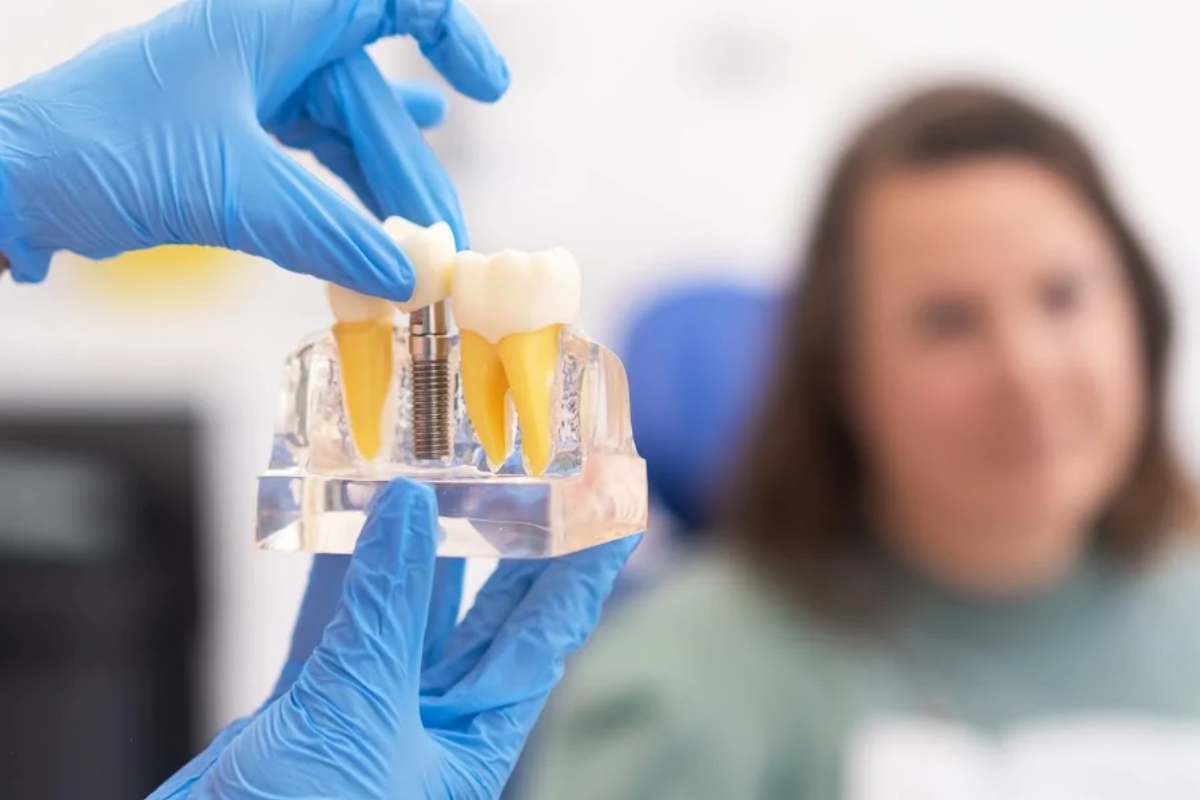
A dental implant is a small post, commonly made from titanium, that is surgically placed into the jawbone.
It functions as an artificial tooth root.
After the surrounding bone heals and integrates with the implant, a restoration can be attached.
A single-tooth implant restoration generally includes three components:
- Implant post: The portion placed into the jawbone.
- Abutment: A connector between the implant and the restoration.
- Dental crown: The visible replacement tooth.
Together, these components can restore the appearance and function of a missing tooth.
Unlike a traditional dental bridge, a single implant generally does not require reshaping the neighboring teeth for support.
Are Dental Implants Better Than Dental Bridges?
Both treatments can replace missing teeth, but they work differently.
A traditional bridge relies on neighboring teeth for support. These teeth are usually prepared to accommodate crowns.
An implant-supported crown is anchored independently in the jawbone.
Implants may help preserve more of the adjacent natural tooth structure. They also provide functional stimulation to the surrounding bone, although they cannot completely prevent all future bone changes.
However, implants require surgery and sufficient bone support.
A bridge may be preferable when neighboring teeth already need crowns, surgery is unsuitable, or the patient wants a different treatment approach.
The right choice depends on the patient’s oral health, preferences, treatment timeline, and budget.
Who Is a Candidate for Dental Implants?
Many adults with missing teeth may qualify for implant treatment.
However, successful placement depends on several factors.
Healthy Gum Tissue
Active periodontal disease can increase the risk of complications around implants.
Gum inflammation and infection should be addressed before treatment whenever possible.
Adequate Jawbone Support
An implant needs enough bone to remain stable.
If substantial bone loss has occurred, bone grafting may be necessary.
A dentist can evaluate bone volume through clinical examination and appropriate imaging.
General Health
Certain medical conditions and medications may affect healing.
Uncontrolled diabetes, smoking, and some medications affecting bone metabolism can increase treatment risks.
These factors do not automatically rule out implants, but they require careful assessment.
Commitment to Oral Hygiene
Dental implants cannot develop cavities, but the surrounding gums and bone can become inflamed or infected.
Daily brushing, cleaning around the restoration, and routine professional examinations remain essential.
How Long Does Dental Implant Treatment Take?
Implant treatment usually involves several stages.
The process begins with an examination and treatment planning.
If the damaged tooth remains, extraction may be necessary.
Some patients can receive an implant shortly after extraction, while others require healing before placement.
Following implant surgery, the bone needs time to integrate with the implant surface.
This process often takes several months.
Once healing is sufficient, the dentist can proceed with the final restoration.
Additional procedures, such as bone grafting, may extend the timeline.
Patients should avoid assuming that every implant can be completed in one appointment.
Do Dental Implants Look and Feel Natural?
A properly designed implant restoration can closely resemble a natural tooth.
The crown is selected to complement the surrounding teeth in shape, size, and color.
Because the implant is anchored in bone, it can provide stable support during chewing.
However, implants do not have the same periodontal ligament as natural teeth, so their sensory response is different.
Some patients notice this difference initially, while others become accustomed to their restorations quickly.
Why Should Poway Patients Consider Replacing a Missing Tooth Early?
Replacing a missing tooth is not always urgent, but early evaluation provides more treatment options.
A dentist can assess whether the neighboring teeth are moving, how much bone remains, and whether a replacement would improve function.
Patients in Poway, Rancho Bernardo, and Scripps Ranch can discuss tooth replacement at Rolling Hills Family Dentistry.
The practice offers dental implants and uses digital diagnostic technology to support treatment planning.
Even if you are not ready to begin treatment, an examination can help establish whether delaying replacement may complicate future care.
How Can You Protect a Dental Implant Long-Term?
Dental implants require ongoing maintenance.
Patients should brush twice daily with fluoride toothpaste and clean between teeth and around the implant restoration.
Regular professional examinations help identify inflammation, changes in bite pressure, and problems with the restoration.
Patients who grind their teeth may need additional protection, such as a nightguard.
Avoiding tobacco also supports healthier oral tissues.
With appropriate care, implants can function for many years, although no restoration is guaranteed to last a lifetime.
Frequently Asked Questions
1. Is dental implant surgery painful?
Local anesthesia is used to control pain during implant placement. Mild swelling, tenderness, or bruising may occur afterward. Recovery varies with the procedure.
2. Can I get a dental implant years after losing a tooth?
Possibly. Patients who have been missing teeth for several years may still qualify. However, bone loss or tooth movement may require additional treatment.
3. Where can I discuss dental implants in Poway, CA?
Rolling Hills Family Dentistry offers dental implant consultations in Poway. A dental examination can help determine whether implants are appropriate for your situation.
4. How long do dental implants last?
Implants can remain functional for decades, but longevity depends on oral hygiene, bone health, smoking habits, bite forces, and routine dental maintenance.
Restore More Than the Appearance of Your Smile
A missing tooth can gradually affect the way your remaining teeth function. Understanding your replacement options early may help prevent additional complications.
At Rolling Hills Family Dentistry in Poway, CA, our dental team can evaluate your missing tooth and discuss available restorative treatments.
Schedule a consultation and explore your options for restoring your smile.