12285 Scripps Poway Parkway Suite 104 Poway, CA 92064


When faced with the decision of replacing missing teeth, many people find themselves torn between dental implants and traditional dentures. Both options have their merits, but understanding the differences can help you make the best choice for your oral health and lifestyle. Let’s explore the pros and cons of dental implants and traditional dentures to determine which solution might be right for you.
What Are Dental Implants?
Dental implants are a modern solution for missing teeth, consisting of three main components:
- Implant Fixture: A titanium post that is surgically embedded into the jawbone, acting as a replacement root.
- Abutment: A connector piece that sits on top of the implant fixture, securing the dental crown.
- Dental Crown: A custom-made tooth-like cap that is placed on the abutment, completing the restoration.
Advantages of Dental Implants:
- Durability: Implants are designed to last many years, often a lifetime, with proper care.
- Functionality: They function like natural teeth, allowing you to eat and speak without restriction.
- Bone Health: Implants stimulate the jawbone, preventing bone loss that often accompanies tooth loss.
- Aesthetics: They offer a natural look and feel, closely mimicking the appearance of real teeth.
Disadvantages of Dental Implants:
- Cost: Implants are generally more expensive than dentures, and insurance coverage may vary.
- Surgical Procedure: The placement of implants requires surgery, which may involve a longer recovery period.
- Bone Density Requirements: Adequate bone density is needed for successful implant placement. Those with significant bone loss may require additional procedures like bone grafting.
What Are Traditional Dentures?
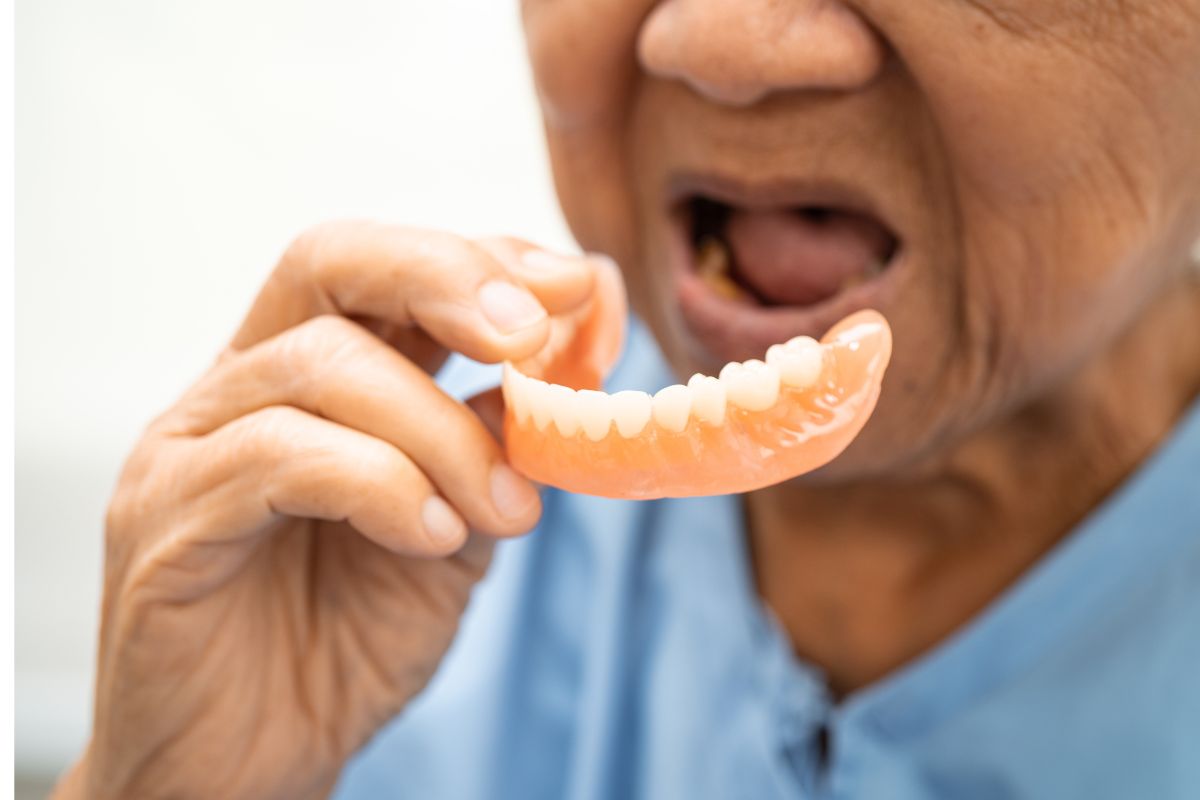
Traditional dentures are removable prosthetic devices designed to replace missing teeth. They come in two types:
- Complete Dentures: Used when all the teeth in an arch (upper or lower) are missing.
- Partial Dentures: Used when some natural teeth remain, and they fill in the gaps left by missing teeth.
Advantages of Traditional Dentures:
- Cost-Effective: Generally less expensive than dental implants, making them more accessible for many people.
- Non-Surgical: They do not require surgery, which eliminates the risks and recovery time associated with surgical procedures.
- Quick Solution: Dentures can be made relatively quickly, providing a faster solution for missing teeth.
Disadvantages of Traditional Dentures:
- Comfort and Fit: Dentures can sometimes feel less comfortable or secure compared to implants. They may require adjustment and can slip or shift during eating or speaking.
- Maintenance: Regular cleaning and adjustments are necessary to maintain comfort and functionality.
- Bone Loss: Unlike implants, dentures do not stimulate the jawbone, which can lead to bone loss over time and may affect the fit of the dentures.
Making the Decision: What’s Right for You?
When choosing between dental implants and traditional dentures, consider the following factors:
- Budget: Assess your financial situation and insurance coverage. While implants may have a higher initial cost, they could potentially save money in the long run due to their durability.
- Lifestyle: Think about how important factors like eating habits, speech, and aesthetics are to you. Implants offer a more permanent and natural solution, while dentures may be more suitable for those who prefer a removable option.
- Health Considerations: Evaluate your overall health, bone density, and any potential need for surgical procedures. Implants require sufficient bone density and a commitment to maintaining oral health, whereas dentures might be a better option if surgery is not feasible.
- Time and Commitment: Implants involve a more extended process with multiple stages, including surgery and healing time. Dentures provide a quicker solution with immediate results.
Ultimately, the choice between dental implants and traditional dentures should be made in consultation with your dentist, who can assess your specific needs and recommend the best option based on your individual circumstances. Both treatments have their advantages, and the right choice will depend on your personal preferences, budget, and oral health.